Hunter Valley Wine Facts That Surprise First-Time Visitors
The short answer. The Hunter Valley is Australia’s oldest wine region, planted in 1828. Its signature white spent a century sold under other regions’ names. Its vines sit on a subtropical latitude that should not grow fine wine at all. And the kangaroos in the vineyard photographs are real, not staged.
Most facts about wine regions are marketing. These are the ones that change what you taste, or that visitors get wrong before they arrive.
The vines went in before Victoria was a colony
James Busby brought cuttings to New South Wales in the 1820s. George Wyndham and James King planted the first commercial vineyards at Dalwood and Kirkton in 1828 — before Melbourne existed, and decades before the Barossa or Margaret River. Everything Australian wine became started on this valley floor.
Semillon spent a century under an assumed name
The region’s signature white was planted around 1830 and sold for generations as Hunter River Riesling, Shepherd’s Riesling, Hock, Rhine Gold, White Burgundy and even Chablis. It is none of those things. Only in recent decades has it been sold as Semillon, under its own name, and the style has never been reproduced anywhere else on earth.
🍷 Did you know? Hunter Semillon is picked early and made without oak, so it comes off the line at around 10.5% alcohol — lower than most beers. Left alone for a decade it develops toast, honey and beeswax without ever having seen a barrel.
The latitude should not work
The valley sits at roughly 32 degrees south, subtropical, humid, and prone to rain at harvest. On paper it is the wrong place to grow fine wine. What saves it is afternoon cloud cover off the coast and sea breezes that pull the temperature down, which is why the Shiraz here is medium-bodied and earthy rather than the jammy style warmer Australian regions produce.
Kangaroos really do graze the rows
The vineyards back onto bush, and mobs come out to feed on the grass between rows at dawn and dusk. Travellers on the Pokolbin half-day tour mention them as often as they mention the wine. Watch the horizon between stops rather than looking for them at any one estate.
There is no gate, and never has been
Visitors routinely search for Hunter Valley tickets and admission prices. There is no entrance to buy. The region is working farmland with cellar doors on it, and the only money that changes hands is for tastings, food and transport — the visiting guide breaks down what that actually costs.
The oldest fact on the site is a road
The Great North Road through Wollombi, south-west of the vineyards, was built by convict gangs in the 1820s and 1830s to connect Sydney to the Hunter. Parts of it are still driveable and it remains one of the prettier ways to leave the valley — the nearby page covers that route.
The region survived what wiped out Europe
Phylloxera, the root louse that destroyed most of the world’s vineyards from the 1860s onward, never reached the Hunter. New South Wales quarantine held, and it holds still: bringing vine material into the region is tightly controlled. That is why some Hunter blocks are worked on their own roots rather than grafted, which almost nowhere in Europe can say.
The wine that ages is the one nobody ages
Hunter Semillon is at its most interesting somewhere between eight and fifteen years old, and almost all of it is drunk in the first two. Cellar doors keep museum stock precisely because the wine most visitors take home is not the wine the region is famous for. Ask, and they will usually open one.
This is the single best reason to visit rather than buy a bottle at home: the aged stock rarely leaves the valley. The cellar doors page names the estates that keep the deepest libraries.
The numbers, for the record
| Fact | Figure |
|---|---|
| First commercial vines | 1828, at Dalwood and Kirkton |
| Semillon planted from | About 1830 |
| Cellar doors today | More than 150 |
| Distance from Sydney | 160 km, about 2.5 hours |
| Latitude | Roughly 32° south — subtropical |
| Signature white | Semillon, typically around 10.5% alcohol |
| Signature red | Shiraz, medium-bodied and earthy |
| Harvest | Late January to March |
The chardonnay nobody talks about
Semillon and Shiraz take the headlines, but Hunter Chardonnay went through its own reinvention and almost nobody outside Australia noticed. Twenty years ago it was heavily oaked and broad. Today it is picked earlier and made leaner, and the best examples from Keith Tulloch and Hungerford Hill sit closer to Chablis than to the buttery style the country was once known for.
If your last Australian Chardonnay was a decade ago, this is the wine that will surprise you most. Ask for it after the Semillon and before the reds.
Why the tastings are seated here
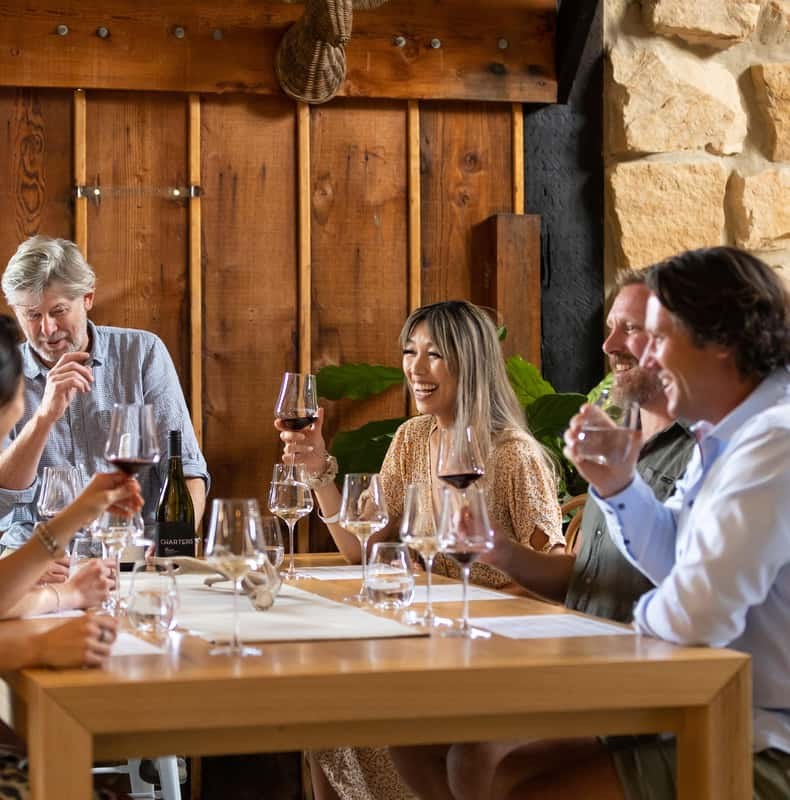
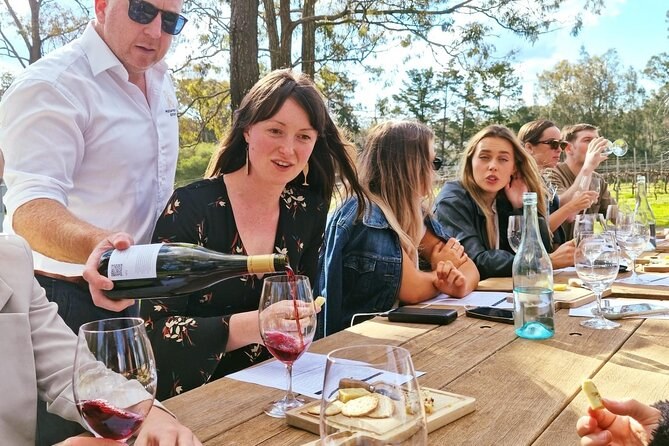
In a lot of wine regions you stand at a counter and work through a list. The Hunter increasingly sits you down, gives you a mat and takes 45 minutes over six wines. The change is partly commercial — a seated tasting sells more bottles — but it changes the visit as well. You get the story of the block, the season and the winemaker rather than a pour and a price list.
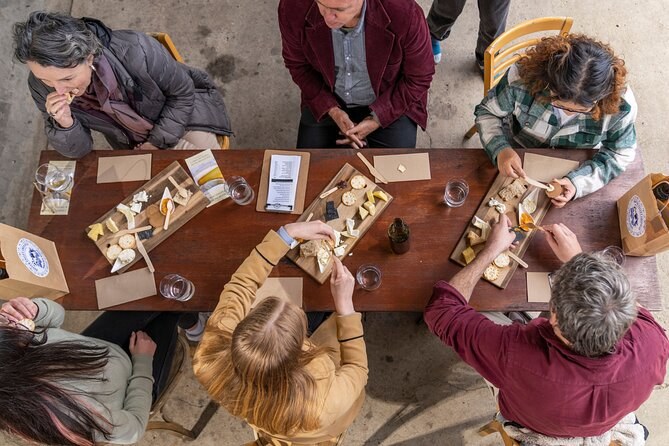
It is also why three cellar doors fills a day here when five would elsewhere. A seated flight, a wine and cheese matching and a chocolate pairing each run to their own clock; the experiences page sets out how long every format takes.
Four things visitors get wrong
- That the train gets you there. It reaches Maitland and Singleton, neither of which is near a cellar door. The transport guide explains the gap.
- That one person can drive and still taste. Three estates puts any driver over 0.05.
- That more cellar doors is better. Past four or five the palate stops telling them apart.
- That you have to finish the glass. Every counter has a spittoon and nobody notices.
Hunter Valley Wine Tasting Tour from Sydney
Four cellar doors, twenty-plus pours and a behind-the-scenes production tour, picked up in central Sydney. From $164 per person, 4.6 from 315 reviews.
Free cancellation up to 24 hours before departure.
The valley is bigger than the vineyards
Wine covers a small part of the Hunter Region. The rest is coal country, thoroughbred studs and farmland, and the vineyard belt around Pokolbin is a strip within it. That is why the drive out from Cessnock changes character within a few minutes, and why the valley never feels crowded even on a busy Saturday.
What to do with all this at the counter
Three of these facts are directly useful when somebody asks what you would like to taste. Ask for the Semillon first and ask how old it is. Ask whether the block is on its own roots. And ask what the afternoon cloud does to the Shiraz — every winemaker in the valley has an answer and most of them enjoy giving it.
None of this requires knowing anything about wine. It requires one question, and the person behind the counter does the rest.
More of the region’s story sits on the cellar doors page, the practical side is on the visiting guide, and the cellar door guide goes estate by estate. Every guided way through the valley is compared, down to the food and wine tour Hunter Valley visitors book for the cheese and chocolate stops.
Come and taste the one wine nobody else can make. Every guided route is at Hunter Valley Wine Tours, with the tasting fees already in the fare.
Tours that take in the heritage estates
Days that stop at the old plantings and pour the aged Semillon the region is known for.